Flexible Date formats supported by SaasAnt Transactions Online
When importing data into QuickBooks Online using SaasAnt Transactions Online, one of the most common challenges users face is handling different date formats. Each country, firm, or accountant may follow a unique date style, and mismatched formats often cause errors during imports.
The good news is that SaasAnt Transactions Online gives you complete flexibility to choose from over 40 date formats, ensuring your data imports correctly into QuickBooks.
In this guide, we will explore why date formats matter, the types of formats available, and the exact steps to configure them in SaasAnt Transactions Online.
Why Use a Specific Date Format?
If your QuickBooks file uses one format and your import file uses another, conflicts can occur. For example, a date written as 01/02/16 can mean January 2, 2016 in one system and February 1, 2016 in another. To prevent such confusion, SaasAnt lets you match the import file format with your QuickBooks settings.
How to Set a Date Format in SaasAnt Transactions Online
If you are new to SaasAnt Transactions Online, here is how you can choose the correct date format before importing your file:
Click on the Gear Icon.
Select Settings.
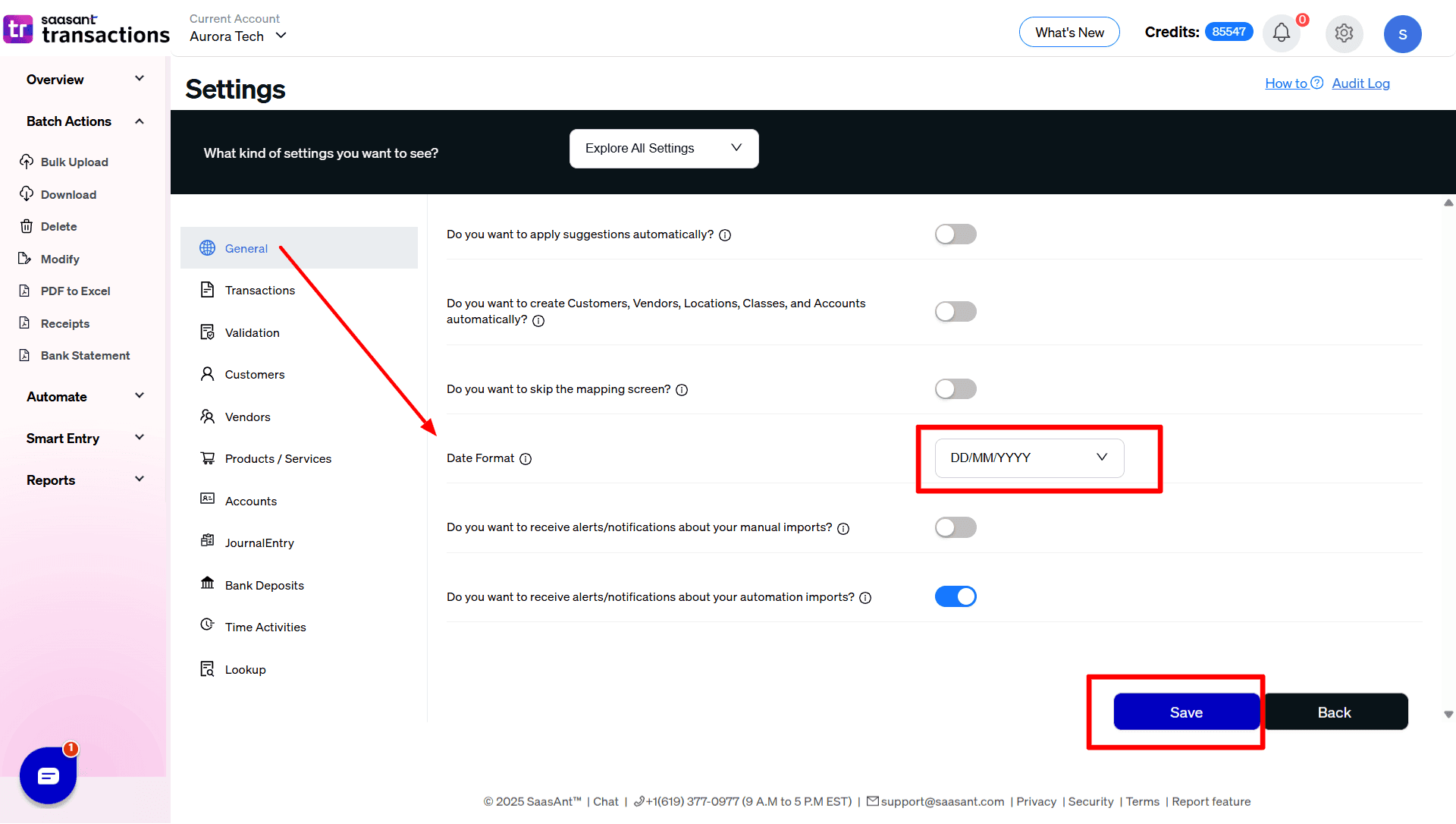
In the settings menu, find Date Format.
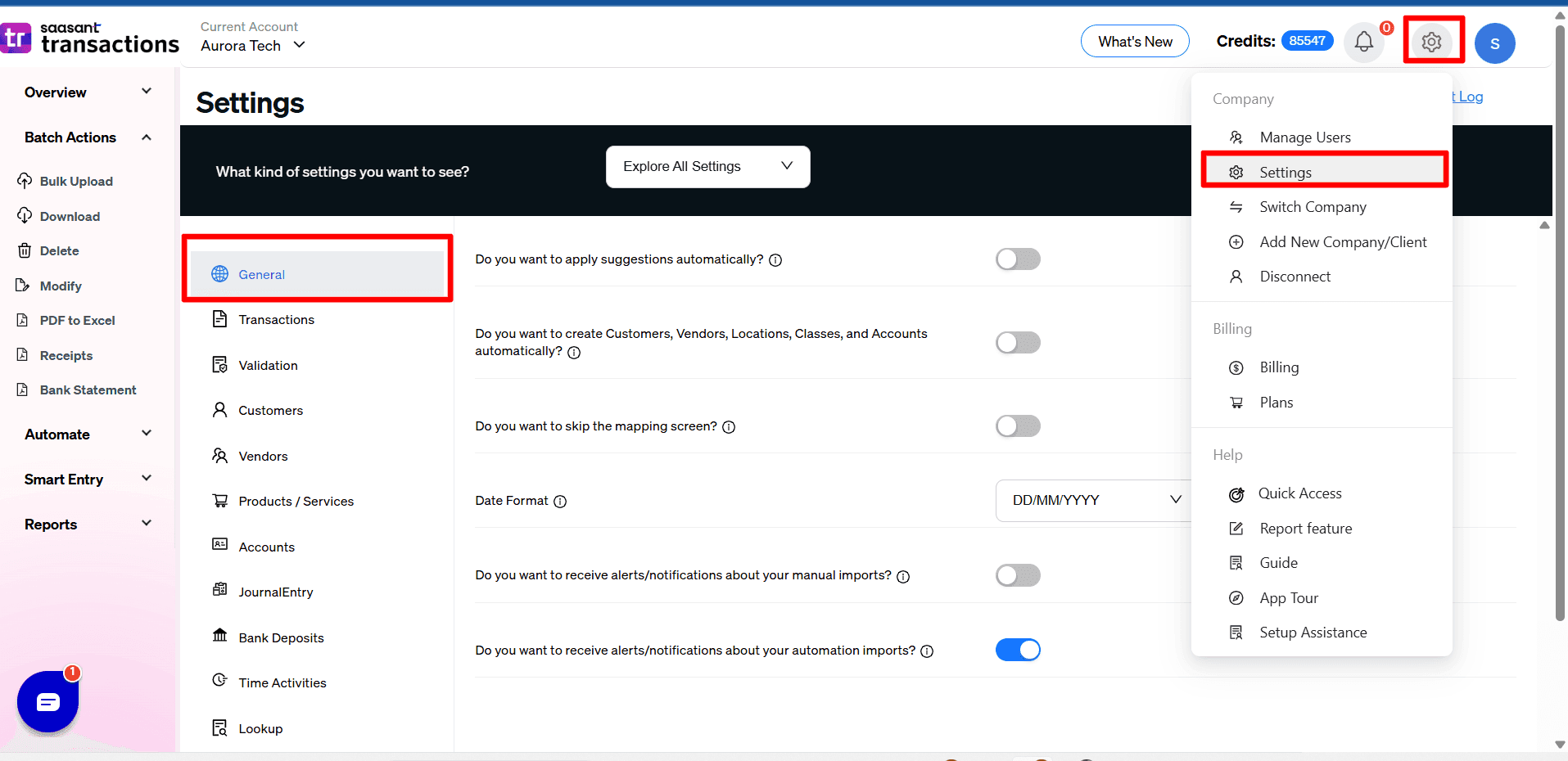
Open the dropdown and choose the format that matches your file.
Click Save to apply your changes.
Date Formats Supported
SaasAnt Transactions Online supports a wide variety of global date styles. Here are some of the available options:
DD/MM/YYYY (15/01/2016)
DD/MM/YY (01/05/16)
MM/DD/YYYY (01/05/2016)
MM/DD/YY (01/05/16)
YYYY/MM/DD (2016/01/15)
YY/MM/DD (16/01/15)
DD/MMM/YYYY (15/JAN/2016)
DD/MMM/YY (15/JAN/16)
MMM/DD/YYYY (JAN/15/2016)
MMM/DD/YY (JAN/15/16)
DD/MMMM/YYYY (15/JANUARY/2016)
DD/MMMM/YY (15/JANUARY/16)
MMMM/DD/YYYY (JANUARY/15/2016)
MMMM/DD/YY (JANUARY/15/16)
D/M/YYYY (5/9/2016)
D/M/YY (5/9/16)
M/D/YYYY (9/5/2016)
M/D/YY (9/5/16)
YYYY/M/D (2016/9/5)
YY/M/D (16/9/5)
DD-MM-YYYY (15-01-2016)
DD-MM-YY (01-05-16)
MM-DD-YYYY (01-05-2016)
MM-DD-YY (01-05-16)
YYYY-MM-DD (2016-01-15)
YY-MM-DD (16-01-15)
DD-MMM-YYYY (15-JAN-2016)
DD-MMM-YY (15-JAN-16)
MMM-DD-YYYY (JAN-15-2016)
MMM-DD-YY (JAN-15-16)
DD-MMMM-YYYY (15-JANUARY-2016)
DD-MMMM-YY (15-JANUARY-16)
MMMM-DD-YYYY (JANUARY-15-2016)
MMMM-DD-YY (JANUARY-15-16)
D-M-YYYY (5-9-2016)
D-M-YY (5-9-16)
M-D-YYYY (9-5-2016)
M-D-YY (9-5-16)
YYYY-M-D (2016-9-5)
YY-M-D (16-9-5)
With more than 40 variations available, you can easily match the date style in your file.
How SaasAnt Handles QuickBooks Date Formats
SaasAnt Transactions Online does not make assumptions about date formats. Instead, it allows you to define them explicitly to avoid confusion. This ensures that a date like 01-02-16 is correctly interpreted according to your preferences, whether that is January 2 or February 1.
How to Identify an Incorrect Date Format
If you have already imported transactions and notice that the dates appear incorrectly in QuickBooks, it usually means the wrong date format was selected.
Here is what happens:
SaasAnt Transactions Online detects the mismatch.
You will see a warning message on your screen.
The message will ask you to revisit your settings and update the date format.
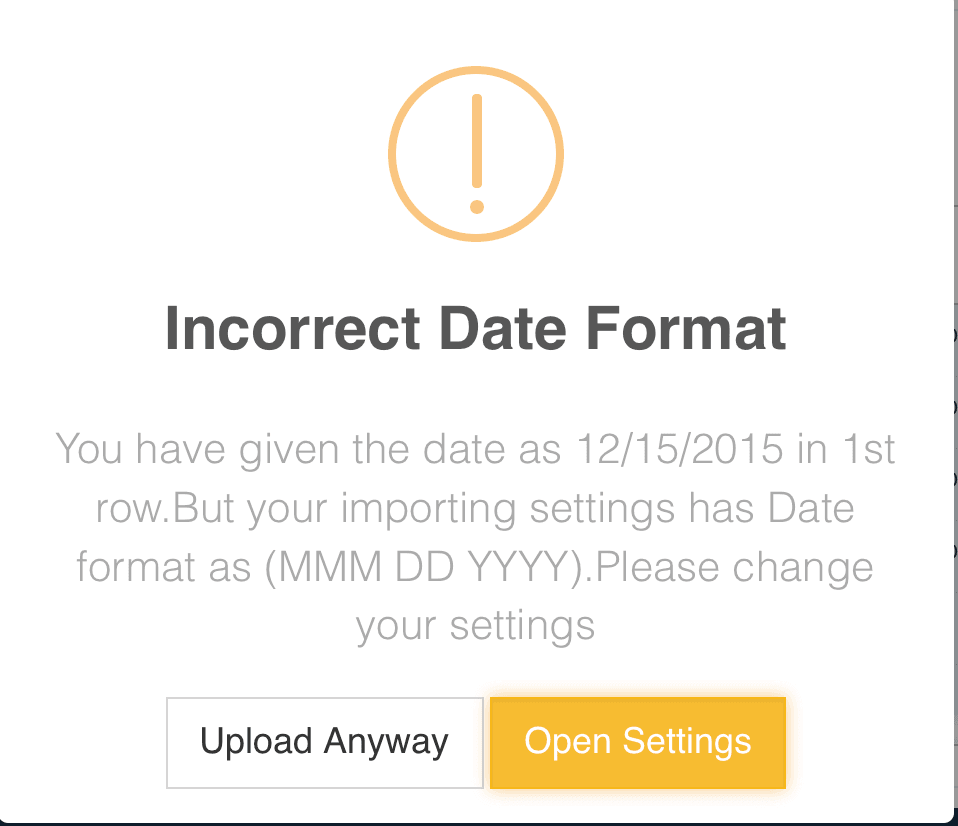
After updating the format, re-upload your file to ensure accurate imports.
Final Thoughts
Managing date formats may sound minor, but it plays a critical role in accurate bookkeeping. By configuring the correct date format in SaasAnt Transactions Online, you can avoid confusion, prevent errors, and ensure your QuickBooks records stay accurate.
With its flexibility to support more than 40 global date styles, SaasAnt makes importing transactions seamless, regardless of your region or file source.
Frequently Asked Questions
1. Why do I need to select a date format before importing data into QuickBooks Online?
Selecting the correct date format ensures that SaasAnt Transactions Online interprets dates in your import file accurately. Without matching formats, dates like 01/02/16 may be read incorrectly, leading to errors in your QuickBooks records.
2. How many date formats does SaasAnt Transactions Online support?
SaasAnt Transactions Online supports more than 40 different date formats, covering a wide range of global standards such as DD/MM/YYYY, MM/DD/YYYY, YYYY/MM/DD, and more.
3. Can I change the date format after importing transactions?
Yes. If you notice incorrect dates in QuickBooks after an import, you can update your date format in SaasAnt Transactions Online settings and re-upload your file to correct the issue.
4. Does SaasAnt Transactions Online automatically detect my file’s date format?
No. To avoid errors, SaasAnt Transactions Online allows you to manually choose your preferred date format in the settings. This prevents assumptions and ensures accuracy when importing data into QuickBooks.
5. Where can I change the date format in SaasAnt Transactions Online?
You can change the date format by clicking the Gear Icon, selecting Settings, and then choosing your preferred Date Format from the dropdown menu. Be sure to save your changes before importing your file.
Video Tutorial
Learn how to connect SaasAnt Transactions Online to QuickBooks Online
How to import data from excel into QuickBooks Online:
Tags
Read Also
SaasAnt – Questions
Celebrating Over 4000+ Reviews: SaasAnt Transactions Transforms Bookkeeping
A Step-by-Step Guide to Migrating from QuickBooks Desktop to Online
Workflow Automation for Bookkeeping and Accounting Professionals